
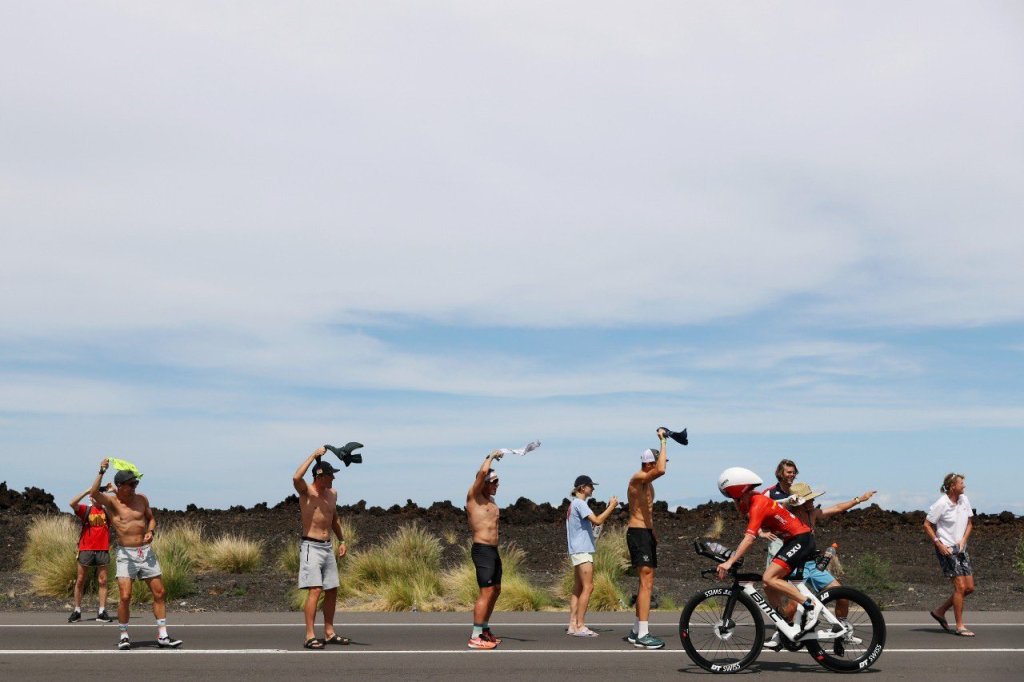
With the 2022 Ironman World Championships in the books, here are my top 5 takeaways from the return to racing in Kona.
1. Debutants dominate
Prior to the races there was lots of talk writing off the chances of any debutants winning in Kona. Fast forward and both the men’s and women’s champion were making their first appearance, as well as racing only their second ever Ironman. With it being 3 years since the last time there was a race in Kona the odds of a rookie taking home the crown were higher than normal, especially on the mens side.
There has been a changing of the guard in 2022 for the men and this is demonstrated by the athletes finishing in the top 10. In 2019 every athlete in the top 10 was over the age of 31. In 2022 7 of the top 10 athletes were under 28. This also signifies the changing times in long course triathlon. Historically the top athletes at this distance would come after a career in short course. Now we are seeing athletes come to long course in their early twenties. This will only benefit the sport and could continue to drive performance to the next level. We have seen athletes like Jan Frodeno dominate into their late 30s but what if a long course athletes peak is actually their late 20s. This is why we could keep seeing records fall.
Chelsea Sodaro winning was more surprising as the women’s field featured the top 5 athletes from 2019 and 5 x champion Daniela Ryf. However she clearly prepared well for the race; she had been to Kona in 2018 to help another athlete prepare for the world champs and she had a training camp their in September. The conditions were favourable for both the men and the women, low winds on the bike kept groups together. Sodaro was in a different league on the run and make it look effortless as she pulled away from athlete after athlete.
2. Women shine, but there’s more to be done
All eyes were on the women, as for the first time they raced on Thursday. It was great to have dedicated coverage for the women, this is standard in short course races and the PTO Tour events. In previous years the drama towards the end of the women’s race could get missed as the focus was on the men’s race at the finish. Dividing the days will also have hopefully made the race fairer, with no male pros and age groupers playing a factor.
Ironman got lots of praise for putting the women on their own day however the reason they needed to do this is because they largely increased the number of age groupers qualifying for Kona, making it not possible to run the races on the same day. So it was a requirement rather than a pure choice.
If Ironman really wanted to highlight the women’s they could have had the men on the Thursday and the women on the Saturday. This is something that hasn’t been done across any level of triathlon. If you watch WTCS, Super League, PTO Tour events, the Collins Cup, the women are always racing before the men. This can actually give men an advantage as they get to see how the women perform in the conditions and on the course. It would be cool to see this order mixed up race to race.
The downside was that the race was on a Thursday. With the racing continuing into the night in Europe this will have got less attention than the mens racing at the weekend. The PTO events ran Saturday and Sunday but I can understand the logistical challenges of running IM events on consecutive days. An alternative option would be to have a women’s weekend and a men’s weekend. There are pros and cons to this but it could lead to more equal coverage and reduce the number of people in Kona all at once.
3. Live coverage still has a ways to go
Ironman live coverage has come under criticism in the past but the coverage in Kona showed some improvement. The coverage benefitted from the splits days, allowing viewers to follow each race fully. However the key addition was Mirinda Carfrae. Having a presenter who knows, and is still racing against, the athletes on course provided an extra level of detail to the commentary. She was able to provide a greater level of insight into racing in Kona and against the contenders in the race that the other commentators couldn’t. Similarly when Jan Frodeno featured in the men’s coverage he was able to breakdown the tactics and how he would approach the race as the events unfolded.
This is something I would like to see continue in triathlon coverage, the inclusion of active professional triathletes allows viewers an insight into the tactics and how the athletes process the race. Obviously this depends on whether athletes would like to do this. We have seen opposite approaches in two recent events. At the US Open the guest presenter was Michael Johnson, who has no background in triathlon and really didn’t add much to the broadcast. Then at the Super League race in Malibu, Non Stanford finished her race and then jumped into the commentary booth to announce the men’s race. She provided great insight into the race dynamics and the course.
In terms of the actual coverage it was still extremely top heavy, only really focusing on the leaders and the first chase pack. I would like to see them check in on the fight for top 10 and fastest movers through the field. I don’t recall seeing Lionel Sanders once, even though he was so far back it would have still been good to check in. On the women’s side once Laura Phillip got her penalty it would have been a great opportunity to drop down the field to see how she was progressing through the bike and the run. This was a key story line in the race so it was a shame for it not to be followed closely by the cameras.
Despite the focus up front they managed to miss the moment that Iden broke away from Blummenfelt, resulting in the commentators thinking that Blummenfelt was the one who had broken away as he was the only one in shot. There is still a long way to go to improve the coverage of Ironman races. This is the reason the PTO events are lapped, it allows the coverage and live fans to see the athletes through the whole field a lot easier.
4. Is time running out in Kona?
With the increasing number of qualifying slots for the world championships in Kona, the question has to be asked whether it is sustainable to still always hold the race where it was created?
Firstly, the pure number of people descending on this small town is cause for concern. In interviews several athletes were saying that the town was being overwhelmed with people, making it difficult to get around and eat out. This can’t be pleasant for locals and there were various reports of altercations between athletes and residents.
Secondly, the cost of competing in Kona has risen sharply, primarily driven by accommodation costs. Several pros decided not to compete citing financial reasons. It simply shouldn’t have to be a decision for professional athletes to make. I would like to see Ironman adopt a similar approach to the PTO where athletes can be put up in a hotel before the race. This would take the financial burden off the athletes who are trying to make a living from the sport.
Finally, does the Big Island favour a certain type of athlete? The 70.3 world championships change locations each year. This means athletes have to adapt to different courses and the conditions. If athletes always race on the same course then are we really determining who the best all round triathlete is?
5. Can 2023 get anywhere close?
Already looking ahead to 2023, will the races get anywhere near the level achieved in 2022?
On the men’s side, it is unlikely to feature Gustav Iden and Kristian Blummenfelt. They are such an interesting pair of athletes and they really carried the hype around the mens race. Jan Frodeno and Alistair Brownlee will try and fill the void left by the Norwegians but neither are a guarantee to make it to the start line, both have struggled with injuries this year. This leaves the exciting young core of athletes that shined in 2022. If Frodeno and Brownlee can stay healthy then it will be a showdown between the old ITU boys vs the young up and comers.
Assuming all the key women return then I can see them stealing the show. Chelsea Sodaro will be returning to prove this wasn’t a one off, a 100% fit Lucy Charles-Barclay will be determined to finally take the top spot on the podium, Laura Phillip will be back with a vengeance after her penalty this year and Kat Matthews will be returning from injury after watching from the side lines. Add previous champions Daniela Ryf and Anne Haug to this group and I’m already getting excited. You can also expect other athletes to make the step up from middle distance to challenge for the title. I would love to see Ashleigh Gentle racing in Kona, she has shown she can race so well in the heat, but with the financial rewards of racing well over the PTO Tour I think this is unlikely.
 Triathlon Insights
Leave a comment